
Fungal Nails
Are your toenails thick, yellow or crumbly?
Hiding your feet when it's time for sandals?
Fungal nails are common, and very treatable with the right plan.
Confirm What It Is
Not every discoloured nail is fungal. We check what's really going on before recommending treatment.
Professional Nail Care
Thinning and reducing thick nails so treatment can reach the infection and shoes feel comfortable again.
A Plan That Sticks
Clear guidance on treatment options and simple habits to stop the infection spreading or coming back.
Fungal NailsYour Questions Answered
What is a fungal nail?
A fungal nail infection (onychomycosis) happens when fungus gets into the nail, often from the same fungus that causes tinea. The nail can become thick, discoloured (white, yellow or brown), brittle or crumbly, and may lift away from the nail bed. Left alone, it usually spreads slowly to other nails.
Who's more likely to get them?
- People who've had tinea between the toes
- Anyone whose feet spend a lot of time sweaty or in enclosed shoes
- Walking barefoot in shared showers, gyms and pools
- People with diabetes or poor circulation
- Older adults, as nails grow more slowly with age
- Previous injury to the nail
How we treat fungal nails
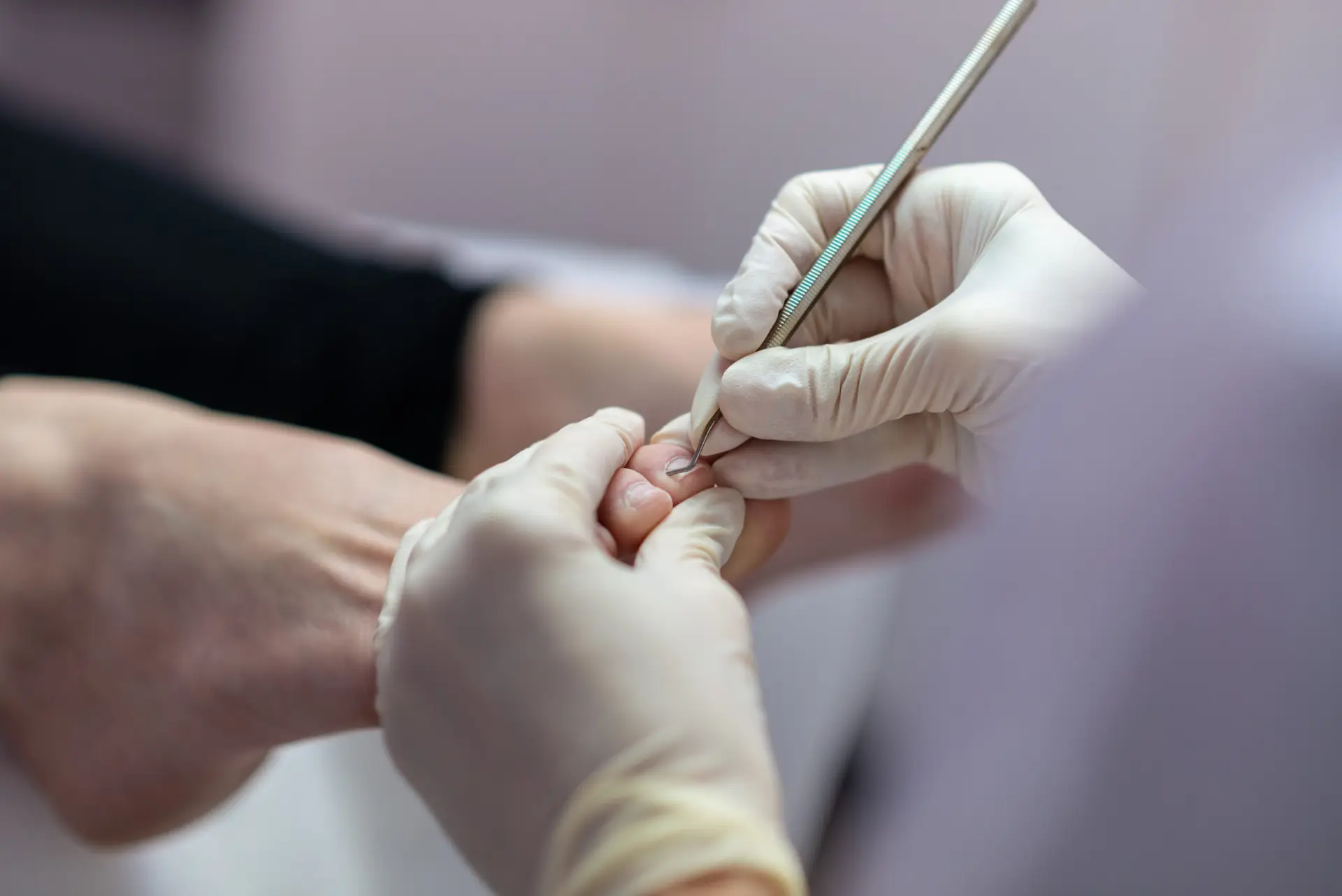
Treatment starts with a proper look at the nail. We then reduce and thin the affected nail, which makes it more comfortable and helps treatment get to where it's needed. We'll talk you through topical options, when to see your GP about oral medication, and how to treat your shoes and socks so the infection doesn't come straight back.
Be patient: toenails grow slowly, so it can take many months for a healthy nail to grow out fully.
Will a fungal nail go away on its own?
It's unlikely. Fungal nails usually get worse slowly over time, so it's best to start treatment early.
Can I wear nail polish?
It's best to avoid nail polish during treatment, as it can trap moisture and hide changes in the nail.
we listen
We gather an understanding of your aches & pains, and what they are preventing you from achieving & doing in everyday life.
We assess
Our podiatrists use hands on techniques, taking the time to find the root cause of your discomfort.
we EXPLAIN
Our podiatrist provide their findings in an easy to understand way, as part of your treatment plan.
we treat
Our hands on approach will guide you to take these first steps in your treatment plan, to get you back on your feet, and doing what you love.