
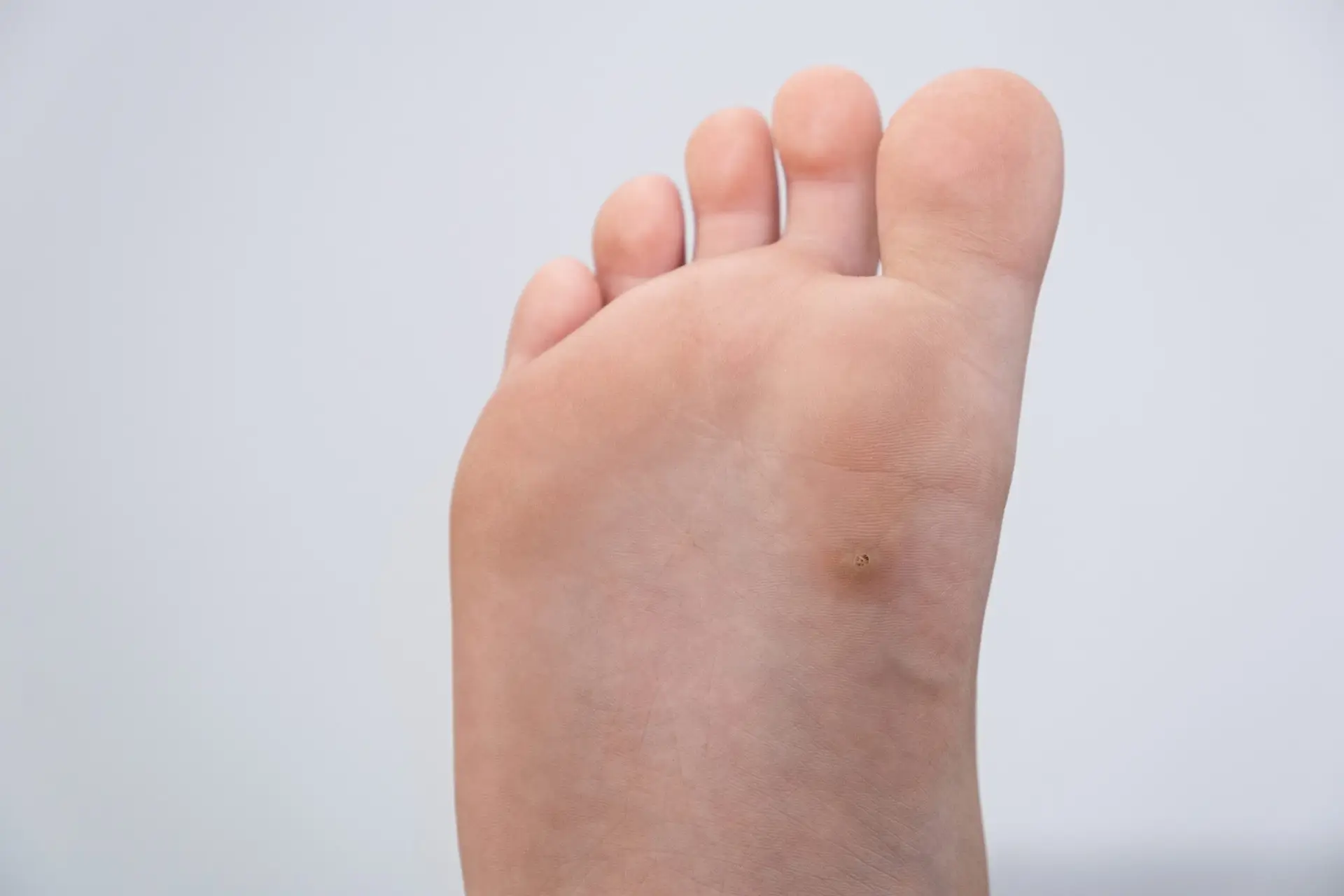
Plantar Warts
Is there a painful, hard spot on the bottom of your foot?
Have chemist wart treatments failed you, again and again?
Stubborn plantar warts need a smarter approach.
Correct Diagnosis
Warts are often mistaken for corns. We confirm what it is before choosing treatment.
Faulkner's Needling
Our preferred treatment for stubborn warts, done under local anaesthetic so it's comfortable.
Works With Your Body
Treatment helps your immune system recognise and fight the virus, not just the visible skin.
Plantar WartsYour Questions Answered
What is a plantar wart?
A plantar wart (verruca) is a skin growth on the sole of the foot caused by the human papilloma virus (HPV). The virus enters through tiny breaks in the skin, often in shared showers, pools and change rooms. Because you walk on them, plantar warts get pushed inwards and covered with hard skin, so they can be painful and easy to confuse with a corn.
Signs it might be a wart
- A rough, hard spot on the sole of your foot or toes
- Tiny black dots (small blood vessels) in the middle
- Pain when you squeeze it from side to side
- Skin lines that go around it rather than through it
- Spreading, or new spots appearing nearby
How we treat plantar warts
We start by confirming it's a wart. For stubborn or long-standing warts, our preferred treatment is Faulkner's needling: the area is numbed with local anaesthetic, then the wart is punctured many times with a sterile needle to push viral particles deeper, where your immune system is more likely to recognise and fight them. It's often performed as a single primary treatment. We'll also give you clear aftercare and tips to avoid picking up warts again.
Are plantar warts contagious?
Yes, they can spread. Wear thongs in shared showers and around pools, and avoid picking or scratching the wart.
Are warts common in kids?
Very common. We treat children and adults, and we'll recommend the gentlest option that suits your child.
we listen
We gather an understanding of your aches & pains, and what they are preventing you from achieving & doing in everyday life.
We assess
Our podiatrists use hands on techniques, taking the time to find the root cause of your discomfort.
we EXPLAIN
Our podiatrist provide their findings in an easy to understand way, as part of your treatment plan.
we treat
Our hands on approach will guide you to take these first steps in your treatment plan, to get you back on your feet, and doing what you love.